Appliance Tips
Pink or Orange Slime in the Dishwasher Filter Area — What It Is and How to Clear It
Harmony Appliance Repair · Greater Vancouver
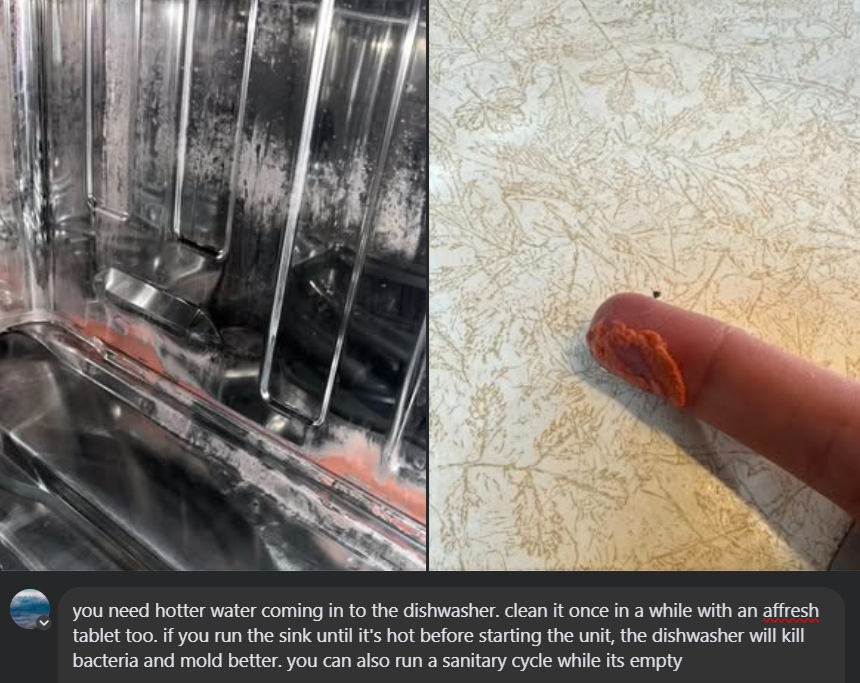
That bright pink or orange slime in the filter area, sump, and lower tub looks alarming — and slightly gross. It is usually bacterial biofilm, often associated with organisms like Serratia marcescens (the same pink film people see in showers and toilet bowls). It thrives in damp, soapy, lukewarm environments.
It is not "rust from the stainless," and it is not dishwasher detergent gone wrong. It is biology meeting warm plastic and rubber.
What the symptom means
Biofilm builds when:
- Inlet water is not hot enough when the cycle starts
- The machine sits closed and damp between loads
- Food soil and detergent residue linger in the filter and sump
- Hard-water scale gives bacteria a rough surface to cling to
You'll often find it in the filter area first — the fine filter, coarse screen, and sump under the bottom rack. Wiping it once without changing habits usually means it returns in a few weeks.
How to clean it (homeowner steps that actually work)
Safety: Use gloves if you prefer — biofilm is unpleasant, and cleaners can irritate skin. Don't mix bleach with ammonia or acid cleaners.
- Clean the filter. Most modern dishwashers have a twist-out fine filter and a coarse screen. Pull the bottom rack, remove the filter assembly, rinse under hot water, and scrub soft food film. Reinstall seated correctly — this is where the pink usually starts.
- Wipe the lower tub. Wipe tub corners and the door bottom with a cloth and mild dish soap or a 1:1 white vinegar solution. Clear any leftover film that washed out of the filter zone.
- Run the kitchen sink hot before you start the cycle. Before every wash — and especially after a deep clean — run the sink faucet until the water is truly hot. Many dishwashers fill from the hot line but still pull a slug of cool water from the pipe. Hotter inlet water helps the unit sanitize and discourages the same pink film from coming back.
- Use a dishwasher cleaner tablet. Products such as Affresh (and similar citric/acid-based dishwasher cleaners) help dissolve grease film and mineral scale inside the tub and circulation path. Follow the package: usually an empty machine on a hot or clean cycle.
- Run an empty sanitize (or hottest) cycle. If your model has a Sanitize option, use it empty after cleaning. Heat plus fresh chemistry knocks back remaining biofilm.
- Leave the door cracked after the last load of the day so moisture can escape.
Repeat the filter clean and wipe-down weekly until the pink stops returning, then monthly as prevention. Keep running the sink hot before cycles as a standing habit — it costs nothing and keeps inlet water where the dishwasher needs it.
About water temperature
For best results, household hot water at the dishwasher should generally reach about 120°F (49°C) — hot enough to clean, not so hot that it scalds at the tap. If your tank or on-demand heater is set very low to save energy, the dishwasher pays the price in soil, odour, and slime. Running the sink hot first is the simple way to confirm the supply is ready before the fill starts.
DIY vs call a tech
Solid DIY for cleaning, filters, and habit changes.
Call a tech if:
- Slime returns aggressively and dishes come out dirty or greasy (spray arms clogged, chopper/filter issues, weak wash motor)
- You smell sewage or see standing water (drain or air gap problem)
- The heating element or control isn't reaching proper temps (failed heater, NTC sensor, or control)
Safety notes
- Never pour large amounts of bleach into a full dishwasher and seal the door — fumes and rubber damage. If you use diluted bleach for a wipe, rinse thoroughly and don't mix with other cleaners.
- Vinegar is fine for wiping and occasional maintenance; don't treat it as a substitute for proper dishwasher detergent in every wash.
- Affresh and similar tablets are cleaners, not daily detergent.
When to call a pro
If you've cleaned thoroughly, fixed inlet temperature habits, and still get poor wash results or standing water, the biology was a clue — not the whole story. A tech can check the heater circuit, drain path, and spray system properly.
Harmony Appliance — we see this one often. Heat, filter care, and a real cleaner cycle beat endless scrubbing.